
How to Design a Commercial Restroom That Will Still Perform 20 Years From Now
A practical handbook for facility managers, architects, engineers, contractors, and building owners.
Executive Summary
The most successful commercial restrooms are rarely the most expensive. They are the ones that continue to operate efficiently year after year with minimal downtime, reasonable maintenance costs, and a positive experience for the people who use them. After more than two decades serving commercial facilities, Category Five Technologies has learned that long-term performance is determined long before the first fixture is installed. The decisions made during planning influence maintenance, water and energy consumption, accessibility, replacement costs, and user satisfaction for decades. This handbook is written for facility managers, architects, engineers, contractors, school districts, healthcare organizations, municipalities, and commercial building owners. Rather than promoting specific products, it focuses on the decision-making principles that consistently produce durable, maintainable, and adaptable commercial restrooms.
Chapter 1
Introduction: Designing for the Next 20 Years
Every commercial restroom looks impressive on opening day. Bright finishes, spotless fixtures, and modern technology create a strong first impression. The true measure of success, however, is not how the space performs during its grand opening. It is how the restroom performs after five, ten, and twenty years of continuous use.
Commercial restrooms are among the hardest-working spaces in any building. Schools may see thousands of student visits every day. Airports operate nearly around the clock. Hospitals require exceptional hygiene while minimizing disruptions. Manufacturing facilities demand durable equipment that withstands heavy use. Each environment places unique demands on restroom design, yet they all share one requirement: reliability.
Too many projects focus almost exclusively on construction budgets. Purchase price is important, but it represents only a fraction of the total cost of ownership. Labor, cleaning, utilities, replacement parts, downtime, and future renovations often exceed the original installation cost over the life of the facility.
Throughout this guide you will find practical recommendations drawn from years of helping customers evaluate products, troubleshoot problems, and modernize facilities. The goal is not to recommend one brand over another. Instead, it is to provide a framework for making better long-term decisions regardless of manufacturer.
Lessons From the Field
One of the most common regrets we hear from facility managers is that maintenance access was treated as an afterthought. A product that saves ten minutes during every service visit can save hundreds of labor hours over its lifetime. Designing with the maintenance team in mind often delivers a greater return than selecting the least expensive equipment.
Chapter 2
Think Beyond Initial Cost
One of the biggest mistakes made during commercial restroom projects is evaluating products primarily by their purchase price. While staying within budget is important, the purchase price represents only a small portion of what a restroom will cost over its lifetime. The real expense is measured over years of operation through maintenance labor, water and energy consumption, replacement parts, downtime, cleaning, and eventual renovation.
A commercial restroom should be viewed as a long-term operational asset. A hand dryer, flush valve, bottle filling station, faucet, or baby changing station may be used thousands—or even millions—of times during its service life. Small differences in durability, serviceability, and efficiency become significant when multiplied over years of daily use. Facility managers who consistently achieve lower operating costs tend to ask a different set of questions. Instead of asking, 'Which product costs the least today?' they ask, 'Which solution will require the fewest service calls? Which manufacturer has dependable replacement parts? How quickly can this unit be repaired? What will this decision cost over the next twenty years?'
The Five Components of Lifecycle Cost
Initial Purchase
The equipment cost is important, but it is only the starting point.
Installation
Electrical work, plumbing, wall preparation, and commissioning all contribute to total project cost.
Operation
Water usage, electricity, consumables, and cleaning requirements continue for the life of the restroom.
Maintenance
Preventive maintenance, replacement parts, technician labor, and downtime often exceed the original purchase price.
Replacement
Products with poor parts availability or limited support frequently require complete replacement long before the building itself is renovated.
Questions Every Project Team Should Ask
- Can maintenance staff access and service this product without removing surrounding finishes?
- Will replacement parts still be available ten years from now?
- How much labor is required for routine maintenance?
- Does the design reduce water, energy, or cleaning costs over time?
- Has this type of product proven reliable in facilities with similar traffic?
Lessons From the Field
Over the years, we've seen facilities replace inexpensive products multiple times while neighboring buildings continued using higher-quality equipment that was still performing well. The lower purchase price looked attractive during construction, but repeated labor, service calls, and replacement costs ultimately made the original 'savings' disappear. Evaluating lifecycle value rather than purchase price alone consistently leads to better long-term outcomes.
Key Takeaways
- Purchase price is only one part of total ownership cost.
- Maintenance labor is often the largest long-term expense.
- Design for easy service, not just attractive appearance.
- Choose products with strong long-term manufacturer support.
- Measure success over decades, not opening day.
Chapter 3
Understanding Your Building and Its Users
No two commercial restrooms should be designed exactly alike. A successful design begins with understanding who will use the space, how often it will be used, and what operational challenges the facility faces. Products that perform exceptionally well in an office building may be a poor fit for a stadium, while a school restroom has very different priorities than a hospital or an airport.
The objective is not to build the most impressive restroom. The objective is to build the right restroom for the people who will depend on it every day. The better the design reflects real usage patterns, the lower the long-term maintenance costs and the better the overall user experience.
Know Your Environment
K–12 Schools
High traffic, heavy wear, vandalism resistance, simple maintenance, and easy access to replacement parts should drive product selection.
Higher Education
Universities often experience varied traffic throughout the day. Energy efficiency, modern appearance, and durability all become important.
Healthcare Facilities
Hygiene, reliability, accessibility, and minimizing disruptions are critical. Products should support infection-control practices and remain dependable under constant use.
Office Buildings
Employee comfort, appearance, acoustics, and low operating costs often receive equal consideration.
Airports, Stadiums & Arenas
Peak demand is extreme. Equipment must recover quickly, minimize queues, and withstand continuous operation during high-volume events.
Manufacturing & Warehouses
Reliability and ease of maintenance typically outweigh cosmetic considerations. Downtime affects operations more than aesthetics.
Parks & Recreation
Weather exposure, vandal resistance, water conservation, and ease of service become major planning considerations.
Lessons From the Field
One of the most common planning mistakes is copying another project's specifications without considering how differently the two facilities operate. A restroom that performs exceptionally in a corporate headquarters may struggle in a busy school or sports venue simply because the usage patterns are completely different. Successful projects begin with understanding the people who will actually use the space—not just the products being installed.
Design Principle
Design around people first and products second. When user behavior, maintenance capabilities, traffic volume, and long-term operational goals drive the planning process, product selection becomes much easier and the finished restroom is far more likely to deliver reliable performance throughout its lifecycle.
Key Takeaways
- Every facility type has unique operational priorities.
- Traffic patterns should influence layout and equipment selection.
- Maintenance capabilities should be considered before products are specified.
- Future building use is just as important as today's requirements.
- Understanding users is the foundation of every successful restroom project.
Chapter 4
Planning Traffic Flow and Restroom Layout
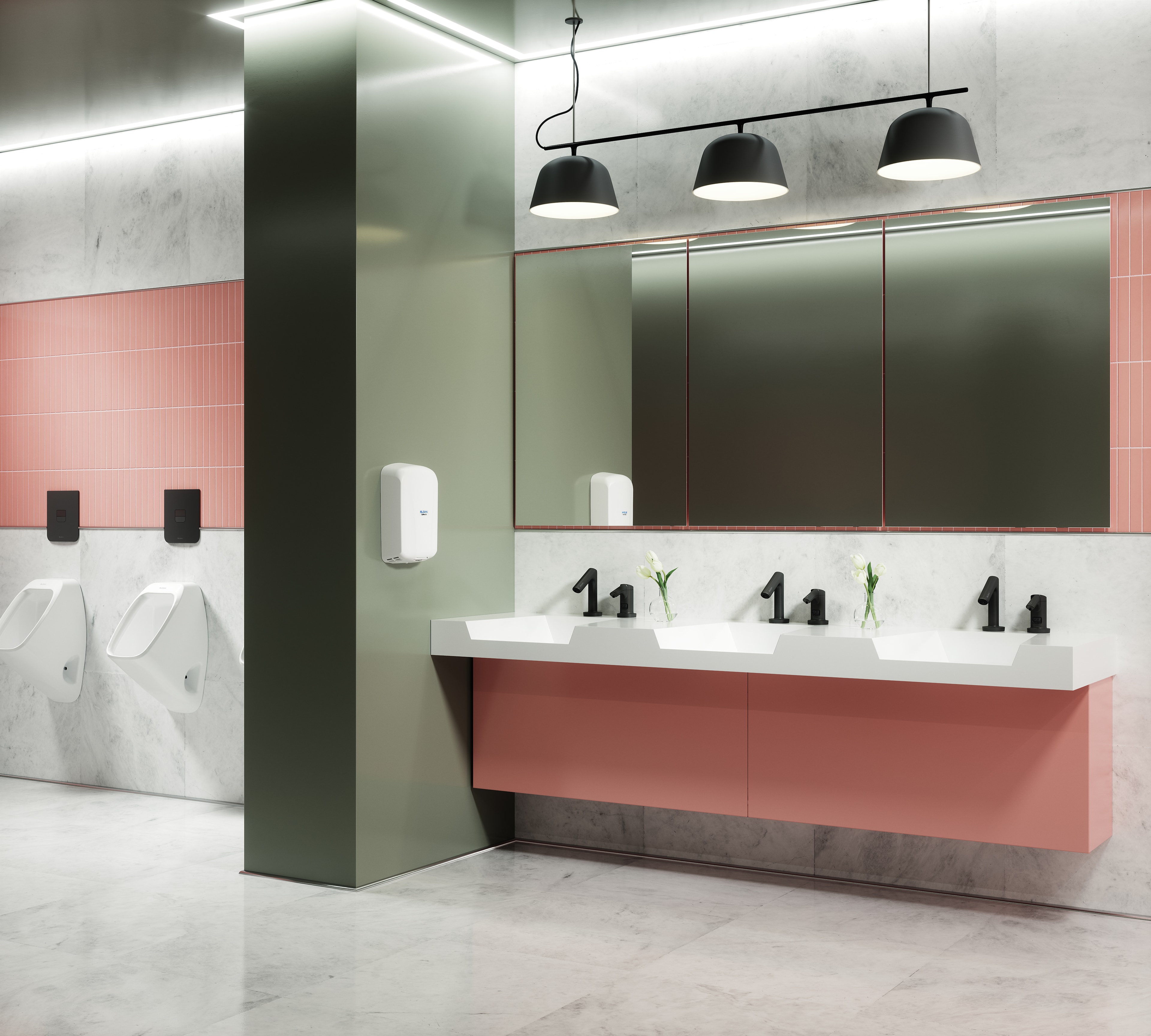
Even the best restroom products cannot overcome a poor layout. Traffic flow determines how comfortably people move through a restroom, how efficiently it can be cleaned, and how well it performs during peak demand. A thoughtful layout reduces bottlenecks, improves accessibility, and creates a better experience for both visitors and maintenance staff.
During planning, think about the restroom as a series of movements rather than a collection of fixtures. Where do people enter? Where do they wait? Where do they wash their hands? Where do they dry them? Where will custodial staff need space to work? Every answer influences the final design.
Design Around Movement
- Separate high-traffic activities: Avoid placing hand drying, bottle filling, or waste receptacles where they block the main walking path.
- Provide clear circulation: Users should be able to enter, use fixtures, wash hands, and exit without crossing unnecessary traffic paths.
- Plan for peak demand: Schools, stadiums, and event venues experience surges that can overwhelm otherwise adequate layouts.
- Protect maintenance access: Custodians should be able to service products without disrupting restroom users whenever possible.
- Think beyond opening day: Leave room for future upgrades or replacement equipment if technology or codes change.
Common Layout Mistakes
- Hand dryers installed where users stand directly in the main traffic lane.
- Trash receptacles immediately beside entrances, creating congestion.
- Bottle filling stations located where queues block adjacent hallways.
- Maintenance panels or shutoffs hidden behind permanent fixtures.
- ADA clearances satisfied on paper but difficult to use in practice.
Lessons From the Field
Many restroom problems are blamed on the equipment when the real issue is the layout. We've seen excellent products receive poor feedback simply because users had to wait in narrow walkways or maintenance teams struggled to access them. A well-planned layout often delivers a greater improvement than changing brands.
Key Takeaways
- Good layout improves both user experience and operational efficiency.
- Traffic flow should influence fixture placement from the earliest design stage.
- Maintenance access deserves equal consideration alongside aesthetics.
- Design for the busiest day the restroom will experience, not the average day.
Chapter 5
Designing for Maintenance and Serviceability
Great commercial restroom design doesn't end when the ribbon is cut. Every restroom will eventually require cleaning, inspections, preventive maintenance, repairs, and product replacement. The easier those tasks are to perform, the lower the lifetime operating costs will be.
Unfortunately, maintenance is often treated as someone else's problem during the design phase. Attractive layouts can quickly become frustrating if technicians cannot reach shutoff valves, replace filters, service electronics, or remove components without dismantling surrounding finishes. Maintenance-friendly design benefits everyone: building owners, custodial staff, maintenance technicians, and restroom users.
Five Maintenance-First Principles
Maintain clear service access
Leave adequate working space around products that require periodic servicing or inspection.
Standardize where practical
Using common product families across a campus can simplify training and reduce spare parts inventory.
Protect critical shutoffs
Water and electrical shutoffs should be accessible without removing finished surfaces whenever possible.
Think about replacement parts
Choose manufacturers with strong long-term support and readily available replacement components.
Reduce unnecessary complexity
Advanced technology can provide tremendous benefits, but only when it can be serviced efficiently throughout its life.
Lessons From the Field
We've seen facilities spend thousands of dollars in additional labor because a simple maintenance task required removing wall panels, working in cramped spaces, or shutting down multiple fixtures. The original installation looked clean, but years of service revealed that maintainability had never been considered. Designing for maintenance almost always pays dividends long after construction is complete.
Key Takeaways
- Maintenance costs often exceed initial purchase costs over a product's life.
- Easy service access reduces downtime and labor.
- Standardization simplifies long-term operations.
- Maintenance professionals should be involved early in the planning process.
- A restroom that is easy to maintain is more likely to remain clean, reliable, and cost-effective.
Chapter 6
Choosing Commercial Restroom Products for Long-Term Value
Selecting commercial restroom products is about much more than comparing specification sheets. Nearly every manufacturer can highlight performance claims, certifications, or attractive features. The real challenge is determining which products will continue delivering value after years of daily use.
The most successful projects evaluate equipment as part of an entire operating system. A hand dryer, faucet, flush valve, bottle filling station, or baby changing station should not only perform well on day one, but remain reliable, serviceable, and supported throughout its expected service life.
Build a Decision Framework
Rather than asking which product is 'best,' develop a consistent evaluation process. The right choice for one facility may not be the right choice for another. A structured decision framework helps project teams compare options objectively.
Durability
Has the product demonstrated reliable performance in environments with similar traffic levels?
Serviceability
Can routine maintenance and repairs be completed quickly with minimal disruption?
Parts Availability
Does the manufacturer maintain long-term replacement part availability?
Manufacturer Support
Is technical documentation, warranty support, and customer service readily available?
Operating Cost
Evaluate water, energy, consumables, and expected maintenance over the product's lifetime.
Accessibility & Compliance
Confirm the product supports applicable accessibility requirements and project specifications.
User Experience
Consider noise, ease of use, hygiene, and overall customer satisfaction.
Lessons From the Field
Over the years, we've found that facility managers rarely regret purchasing dependable equipment that is easy to maintain. What they often regret are products that looked attractive during bidding but became difficult to service, difficult to repair, or expensive to keep operating. Long-term value is created through reliability, support, and maintainability—not simply through initial specifications.
Key Takeaways
- There is rarely a single 'best' product for every application.
- Use a repeatable decision framework instead of relying on marketing claims.
- Lifecycle value should outweigh short-term savings.
- Reliable manufacturer support is part of the product's value.
- Good specifications reduce future maintenance headaches.
Chapter 7
The Most Common Commercial Restroom Design Mistakes
Most commercial restroom problems are not caused by defective products. They are the result of planning decisions that seemed reasonable during design but created unnecessary maintenance, poor user experience, or higher operating costs. The following mistakes appear repeatedly across many facility types and are often preventable.
Designing for Opening Day Instead of Year Twenty
Selecting products and layouts based on appearance alone instead of durability, maintainability, and lifecycle performance.
Ignoring the Maintenance Team
Failing to involve the people who will service the restroom every day often leads to poor access, longer repairs, and unnecessary labor.
Underestimating Peak Traffic
A restroom that works during average occupancy may fail during class changes, sporting events, shift changes, or intermissions.
Prioritizing Lowest Bid Over Total Value
Low initial cost frequently results in higher lifetime expenses through additional maintenance, downtime, and replacement.
Creating Bottlenecks
Hand dryers, waste receptacles, bottle fillers, and sink areas should work together instead of forcing users to cross paths.
Forgetting Future Renovations
Buildings evolve. Leave flexibility for future technology, accessibility improvements, and changing occupancy needs.
Overlooking Replacement Parts
Products should be supported long after installation. Verify long-term parts availability before specifying equipment.
Assuming Every Building Has the Same Needs
Schools, hospitals, offices, airports, parks, and factories all have different priorities. Design for the environment, not a generic standard.
Lessons From the Field
One of the strongest indicators of a successful project is not how many premium products were specified. It is how few surprises the maintenance staff encounter after the building opens. Projects that consider traffic flow, maintenance access, lifecycle cost, and future adaptability almost always outperform projects focused primarily on appearance or upfront budget.
Key Takeaways
- Most long-term problems originate during planning, not installation.
- Maintenance-friendly design improves reliability and lowers operating costs.
- Facility-specific planning consistently outperforms one-size-fits-all specifications.
- Thinking twenty years ahead leads to better decisions today.
Chapter 8
Sustainability and Future-Ready Commercial Restrooms
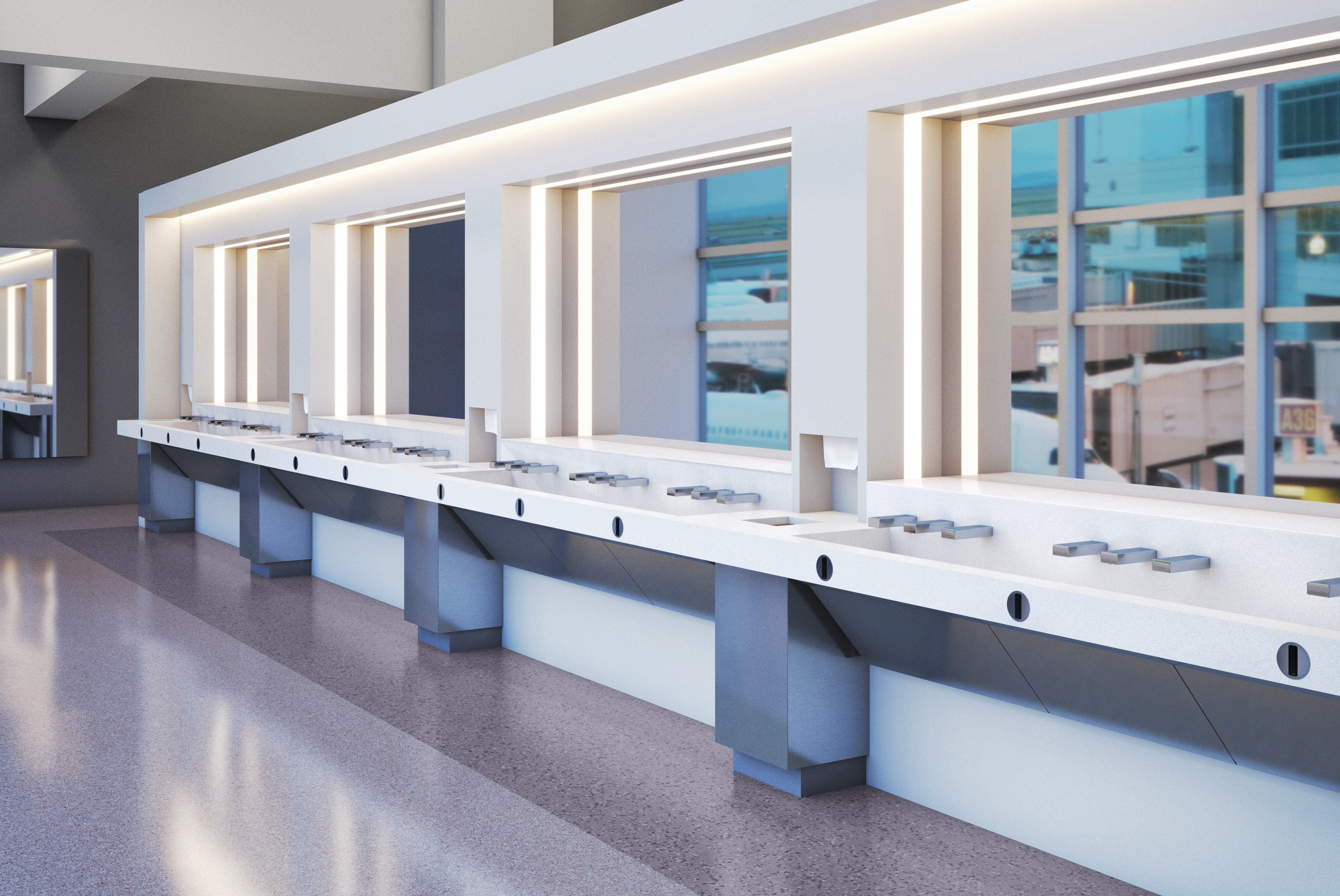
Sustainability in commercial restrooms extends far beyond earning points in a certification program. A truly sustainable restroom is one that conserves resources, minimizes maintenance, remains adaptable to changing technology, and continues serving occupants efficiently for decades. The most environmentally responsible decision is often the one that delivers the longest service life with the fewest repairs and replacements.
Water efficiency and reduced energy consumption are important, but they represent only part of the equation. Lifecycle sustainability also includes durability, repairability, material longevity, cleaning requirements, and waste reduction. Replacing equipment every few years consumes additional materials, labor, packaging, and transportation.
Principles of Sustainable Restroom Design
- Specify products built for long service life: Equipment that remains in service for decades typically has a lower overall environmental impact than products requiring frequent replacement.
- Reduce maintenance waste: Products designed for repair instead of replacement help reduce landfill waste and operating costs.
- Support water conservation: Select plumbing fixtures that balance performance with responsible water use while meeting applicable regulations.
- Improve energy efficiency: Consider the lifetime energy consumption of electrical equipment rather than focusing only on purchase price.
- Plan for future upgrades: Design infrastructure so future technologies can be incorporated without major reconstruction.
Future-Proofing Your Facility
Commercial facilities evolve. Occupancy changes, accessibility standards are updated, and new technologies emerge. Designers should leave flexibility whenever practical by providing adequate electrical capacity, accessible shutoffs, service clearances, and layouts that can accommodate future equipment without major demolition.
Lessons From the Field
Some of the most successful renovation projects we've seen were made possible because the original designers left room for future improvements. Simple decisions—such as providing additional electrical capacity or maintaining generous service clearances—allowed facilities to modernize without extensive reconstruction years later.
Key Takeaways
- Sustainability is measured over the entire lifecycle of the facility.
- Long-lasting, repairable products often provide the greatest environmental value.
- Future-ready design reduces renovation costs.
- Adaptability should be part of every restroom planning strategy.
Chapter 9
Commercial Restroom Planning Workbook & Project Checklists
Planning documents are valuable only if they help project teams make better decisions. This workbook is intended to be used during programming, design, bidding, construction, and future renovations. Whether you are planning a single restroom or an entire campus, working through these checklists helps identify issues before they become costly field changes.
Project Kickoff Checklist
- Define the primary users of the restroom.
- Estimate normal and peak occupancy.
- Identify accessibility requirements.
- Document maintenance staffing and capabilities.
- Establish project budget and lifecycle goals.
- Determine sustainability objectives.
- Review applicable building and plumbing codes.
Design Review Checklist
- Verify traffic flow from entrance to exit.
- Confirm ADA clearances with actual fixture locations.
- Provide adequate maintenance access to all serviceable equipment.
- Evaluate noise, lighting, and user comfort.
- Review electrical and plumbing infrastructure for future expansion.
- Confirm replacement parts availability for specified products.
Pre-Construction Checklist
- Review final specifications with maintenance personnel.
- Verify mounting heights and rough-in dimensions.
- Confirm utility locations before installation.
- Ensure all long-lead products have been ordered.
- Document warranty requirements and startup procedures.
Post-Occupancy Review
Six to twelve months after occupancy, evaluate how the restroom is actually performing. Gather feedback from custodial staff, maintenance technicians, building occupants, and facility management. Document recurring service calls, user concerns, congestion points, and opportunities for improvement. Continuous evaluation creates better standards for future projects.
Lessons From the Field
The most successful facility owners treat every completed project as a learning opportunity. After-action reviews often reveal small adjustments that can dramatically improve future renovations. Capturing those lessons and incorporating them into future standards creates long-term operational value.
Category Five Project Scorecard
Use this scorecard to evaluate your project at key milestones — during design review, pre-construction, and post-occupancy.
| Evaluation Area | What to Evaluate | Rating |
|---|---|---|
| Lifecycle Planning | Are total ownership costs evaluated, not just purchase price? | |
| Traffic Flow | Does the layout support peak demand without bottlenecks? | |
| Maintenance Access | Can technicians service all equipment without major disruption? | |
| Accessibility | Do ADA clearances work in practice, not just on paper? | |
| Sustainability | Are products specified for long service life and repairability? | |
| Future Readiness | Is infrastructure in place for future technology and code changes? |
Key Takeaways
- Standardized planning reduces costly surprises.
- Use checklists throughout the project—not only at the beginning.
- Review completed projects to improve future designs.
- Good documentation becomes a valuable institutional asset.
Chapter 10
Frequently Asked Questions
Author's Closing Thoughts
The best commercial restrooms are rarely defined by a single product or manufacturer. They succeed because hundreds of thoughtful decisions work together to create a space that is durable, accessible, efficient, maintainable, and welcoming. By focusing on lifecycle performance instead of short-term cost, facility owners can reduce operating expenses while delivering a better experience for every occupant.
At Category Five Technologies, we've spent more than two decades helping organizations evaluate commercial restroom and hydration solutions. This guide reflects the planning principles that consistently lead to successful projects. As codes, technology, and best practices evolve, this handbook will continue to grow alongside the Resource Center.
Authoritative References
- 2024 ADA Standards for Accessible Design
- International Plumbing Code (IPC)
- International Building Code (IBC)
- EPA WaterSense Program
- CDC Guidance for Public Facilities
- ASPE Design Standards
- Manufacturer installation and maintenance manuals where applicable
About Category Five Technologies
Category Five Technologies provides commercial facility expertise focused on restroom, hydration, and building solutions. Through ProDryers.com, ProDrinkingFountains.com, and the Category Five Resource Center, our mission is to help facility professionals make informed decisions using practical guidance, real-world experience, and trusted educational resources.